Choosing a kitchen worktop is not just about picking a nice colour. It is one of the hardest-working areas in the kitchen: you cook on it, rest appliances on it, clean it constantly and prepare food on it.
Before deciding, it is worth understanding the most common materials and what you can expect from each one. In this guide we go through them one by one, with their real advantages and drawbacks, just as we explain them to clients planning a kitchen renovation in Palma or Mallorca.
What to know before comparing materials
The best worktop is not the most expensive one, but the one that fits your case. Before looking at samples, think about:
- How you use the kitchen: how often you cook and how intensively.
- How much maintenance you are willing to accept: some materials forgive almost everything, others need more care.
- Your budget: the worktop can represent an important part of the renovation cost.
- The style you want: thickness, edge and finish completely change the final look.
With that in mind, these are the main materials.
Laminate worktops on board
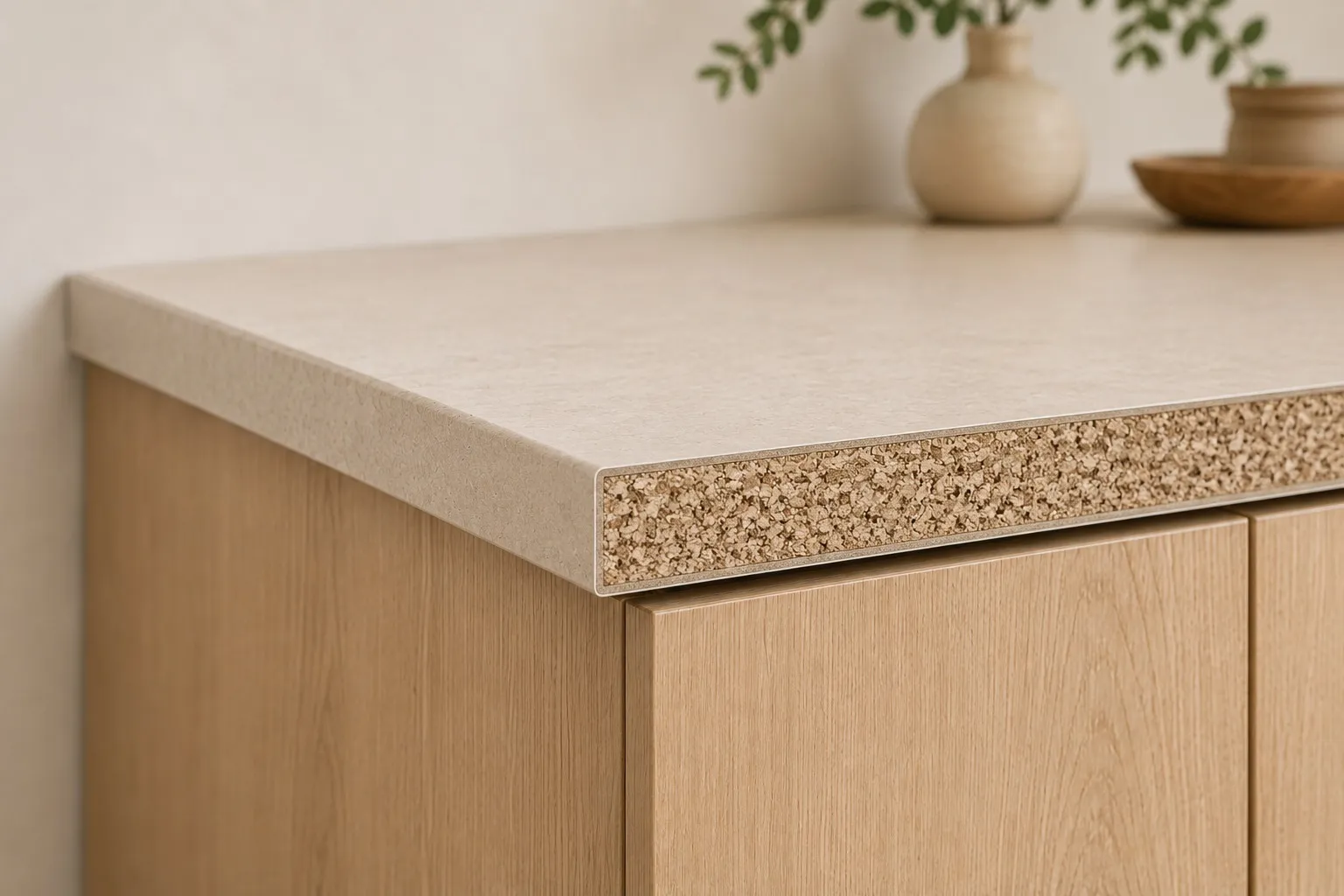
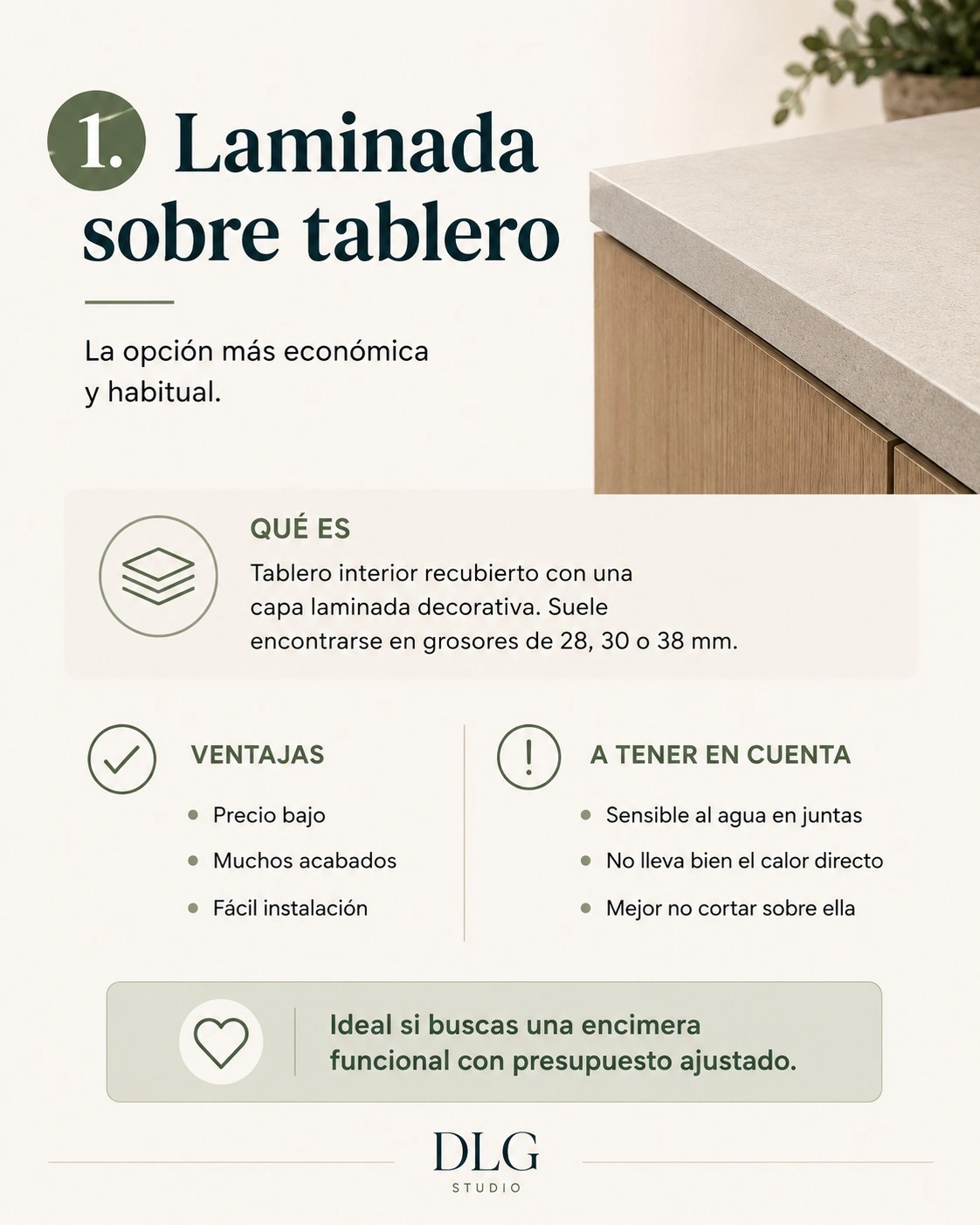
They are one of the most affordable options. They are usually made from an inner board, often wood-based, covered with a decorative laminate layer.
They commonly come in 28, 30 or 38 mm thicknesses and can imitate wood, stone, marble or concrete.
- Pros: low price, many designs and simple installation.
- Cons: sensitive to water around joints, direct heat and cuts.
They are ideal for tighter budgets, rental apartments, utility rooms or simple kitchens.
Compact HPL worktops
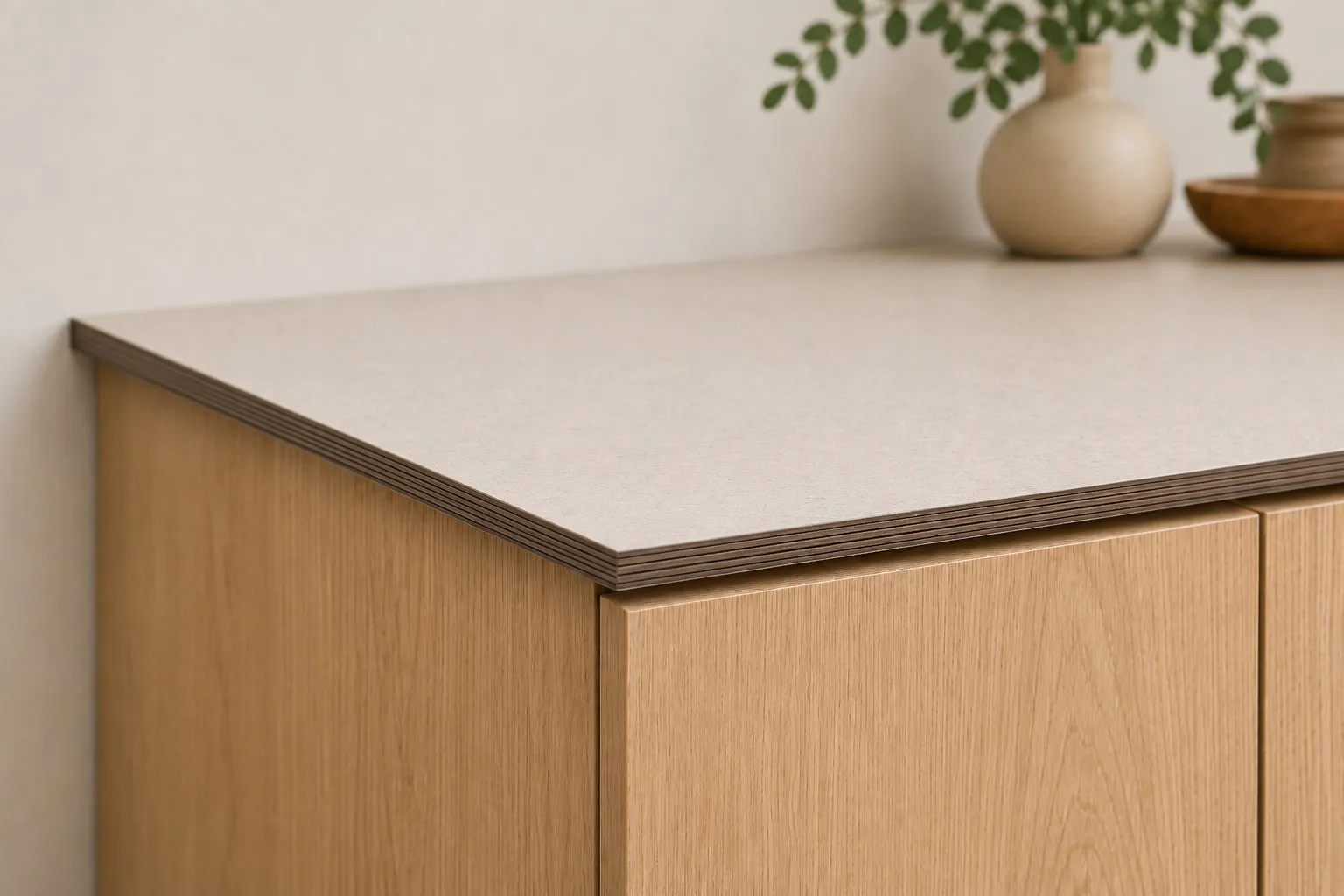
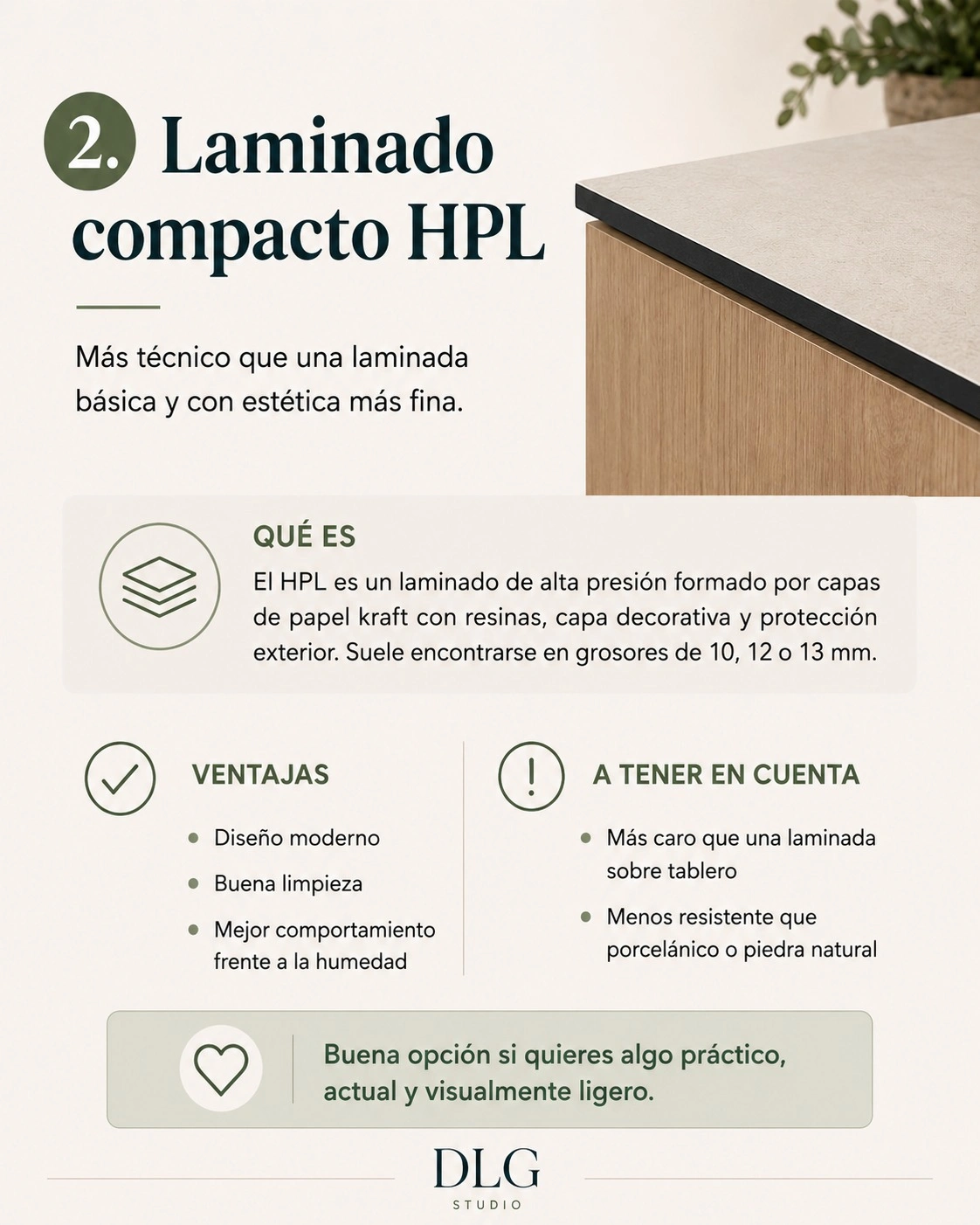
They are not the same as laminate on board. HPL stands for High Pressure Laminate and is made by pressing layers of kraft paper impregnated with resins together with a decorative layer and an outer protection.
In compact HPL, the whole set forms a solid, denser and more technical piece, without depending on a thick inner board. It usually comes in thicknesses of around 12 or 13 mm, with a finer, straighter and more modern look.
- Pros: contemporary design, easy cleaning, better moisture performance and a light visual feel.
- Cons: more expensive than basic laminate and less resistant than porcelain or natural stone.
It is a good middle option for anyone looking for a practical, modern and visually slimmer worktop.
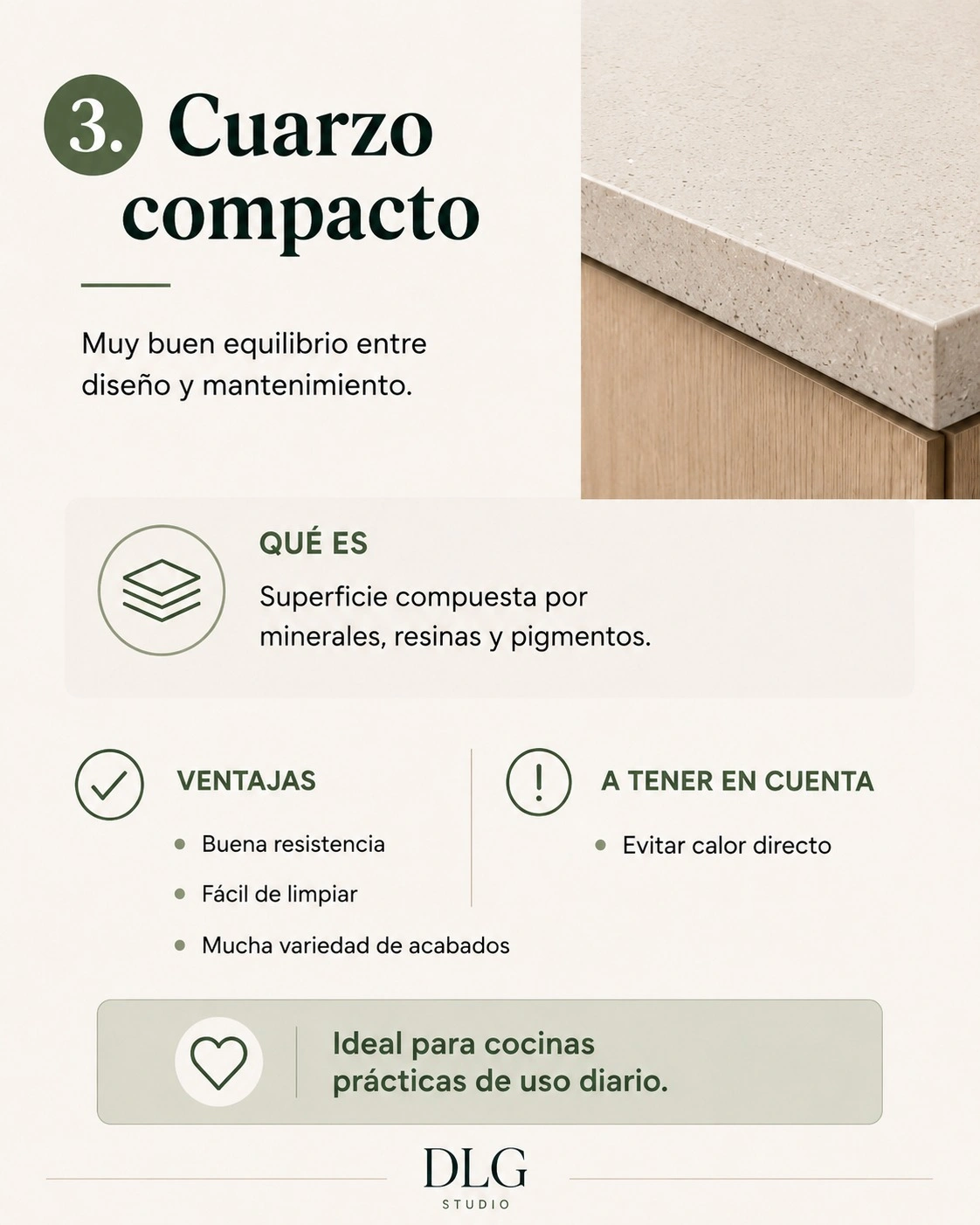
Compact quartz or mineral surface worktops
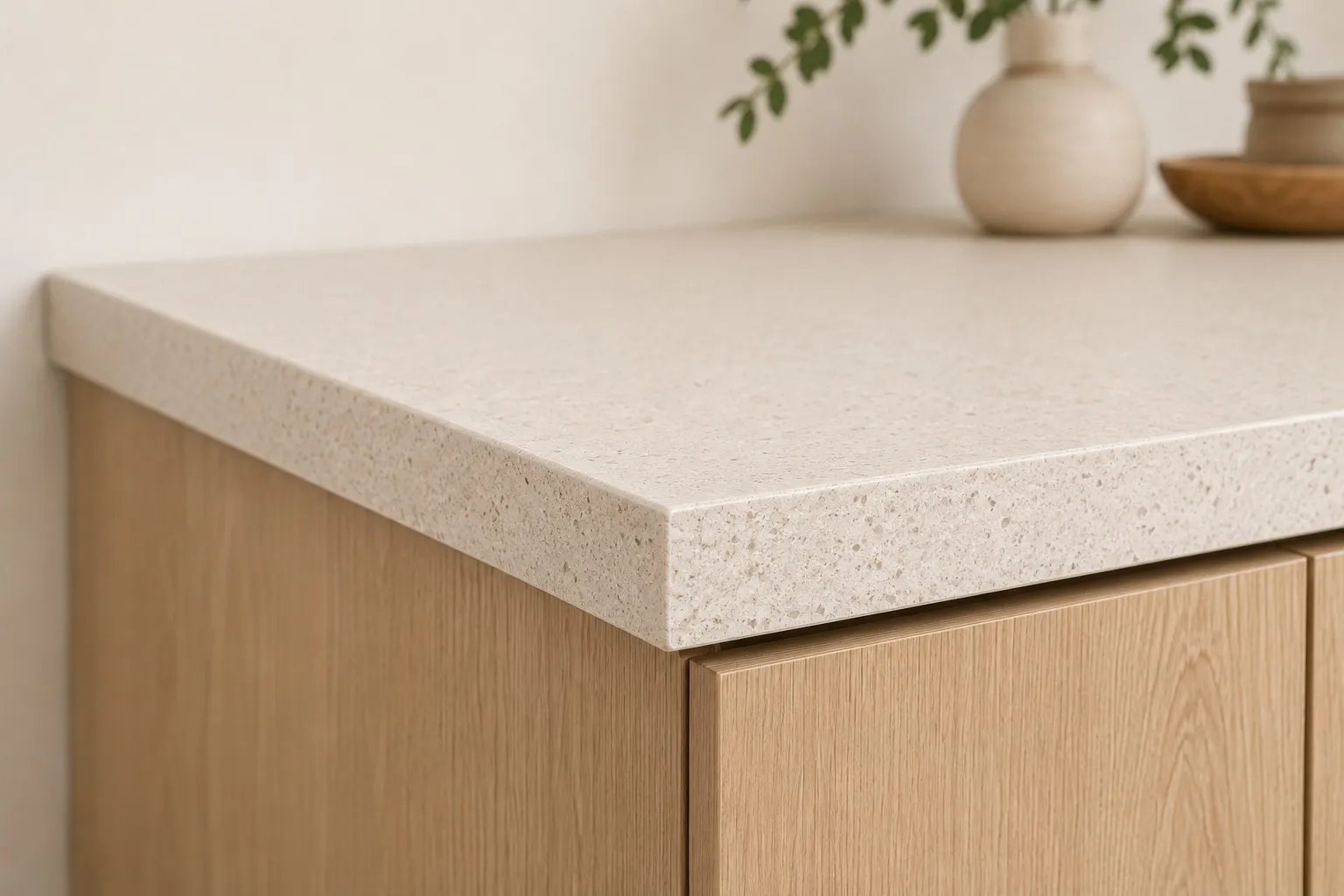
They are very common in contemporary kitchens. They are made from minerals, resins and pigments, although formulas vary depending on the manufacturer.
Their strength is balance: they look good, are resistant, easy to clean and available in a very wide range of colours and finishes.
- Pros: good stain resistance, low maintenance and many designs.
- Cons: direct heat should be avoided.
They are ideal for family kitchens and everyday use.
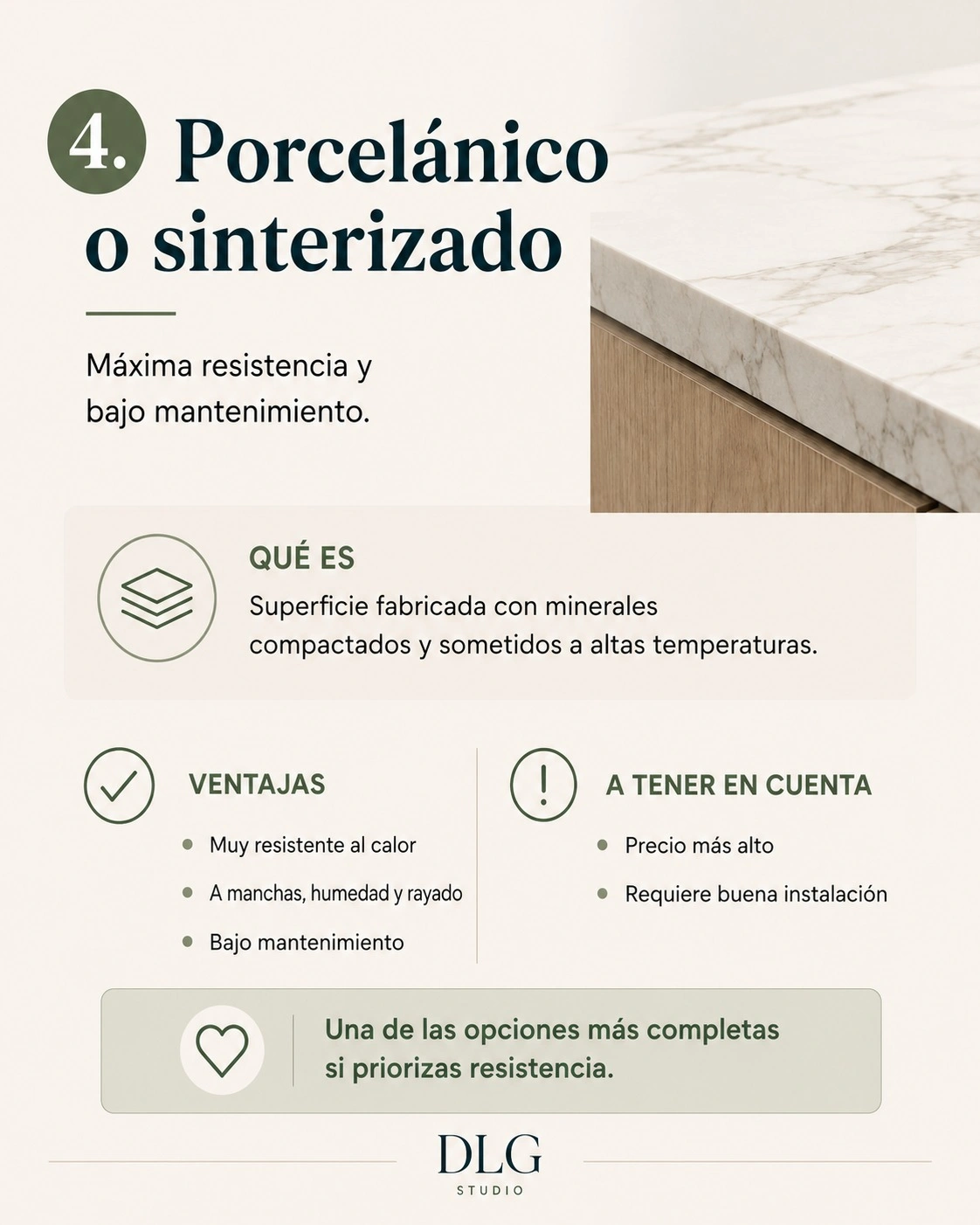
Porcelain or sintered worktops
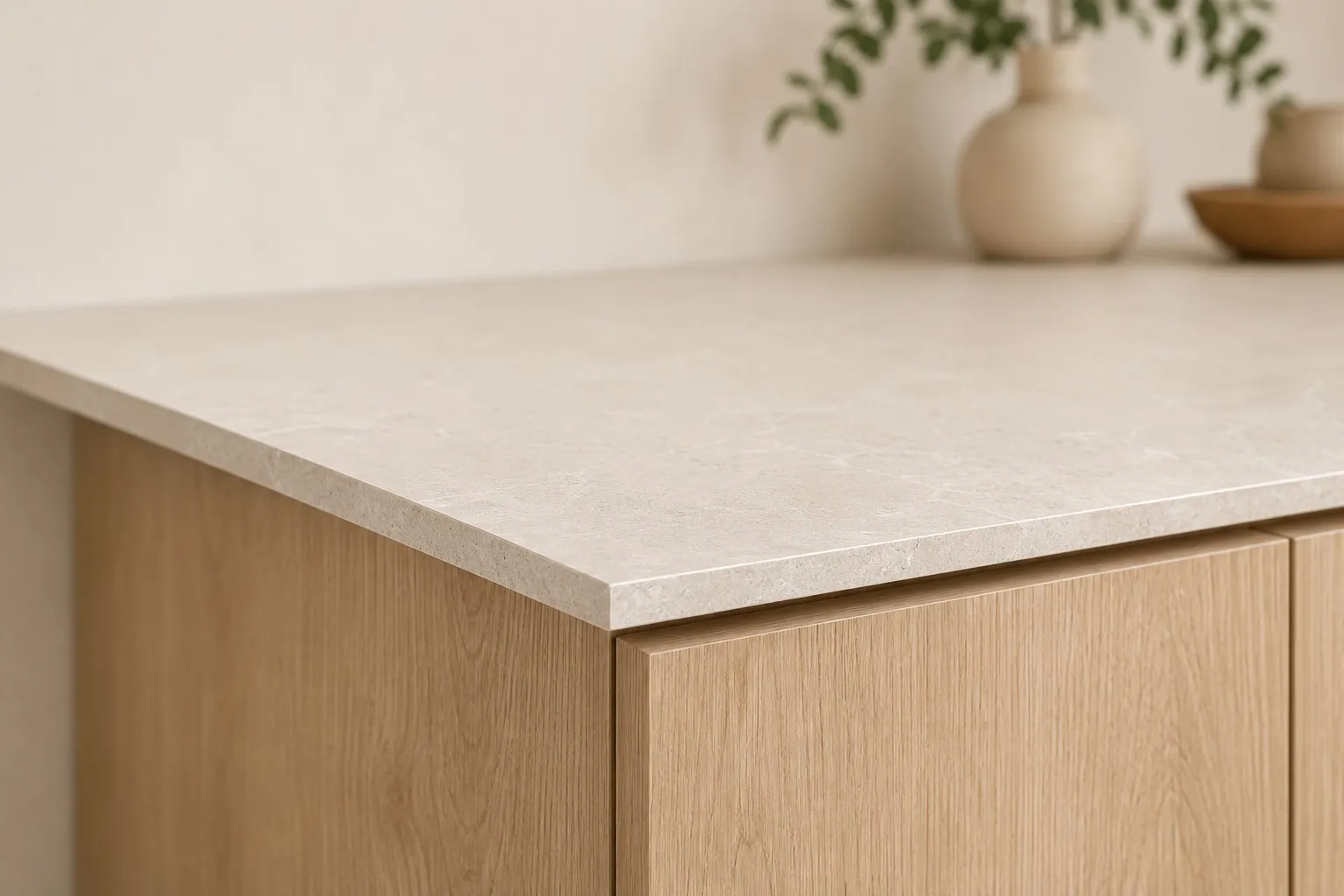
They are one of the most resistant options on the market. They are made from compacted minerals fired at high temperatures, creating a very hard, low-porosity surface.
- Pros: high resistance to heat, stains, humidity and scratching.
- Cons: higher price and more delicate installation.
They are ideal for hard-working kitchens, islands and anyone who wants a resistant, low-maintenance worktop.
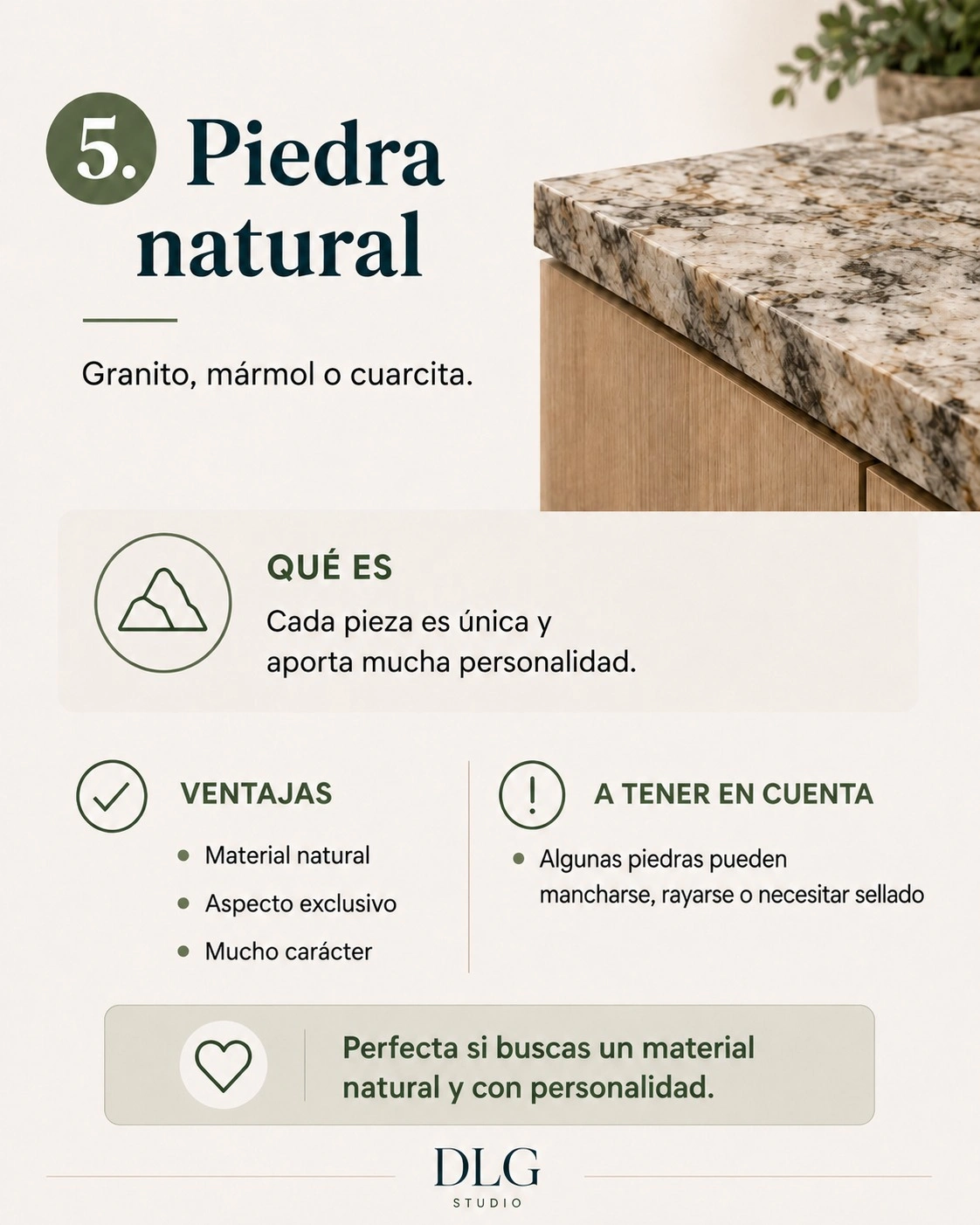
Natural stone worktops
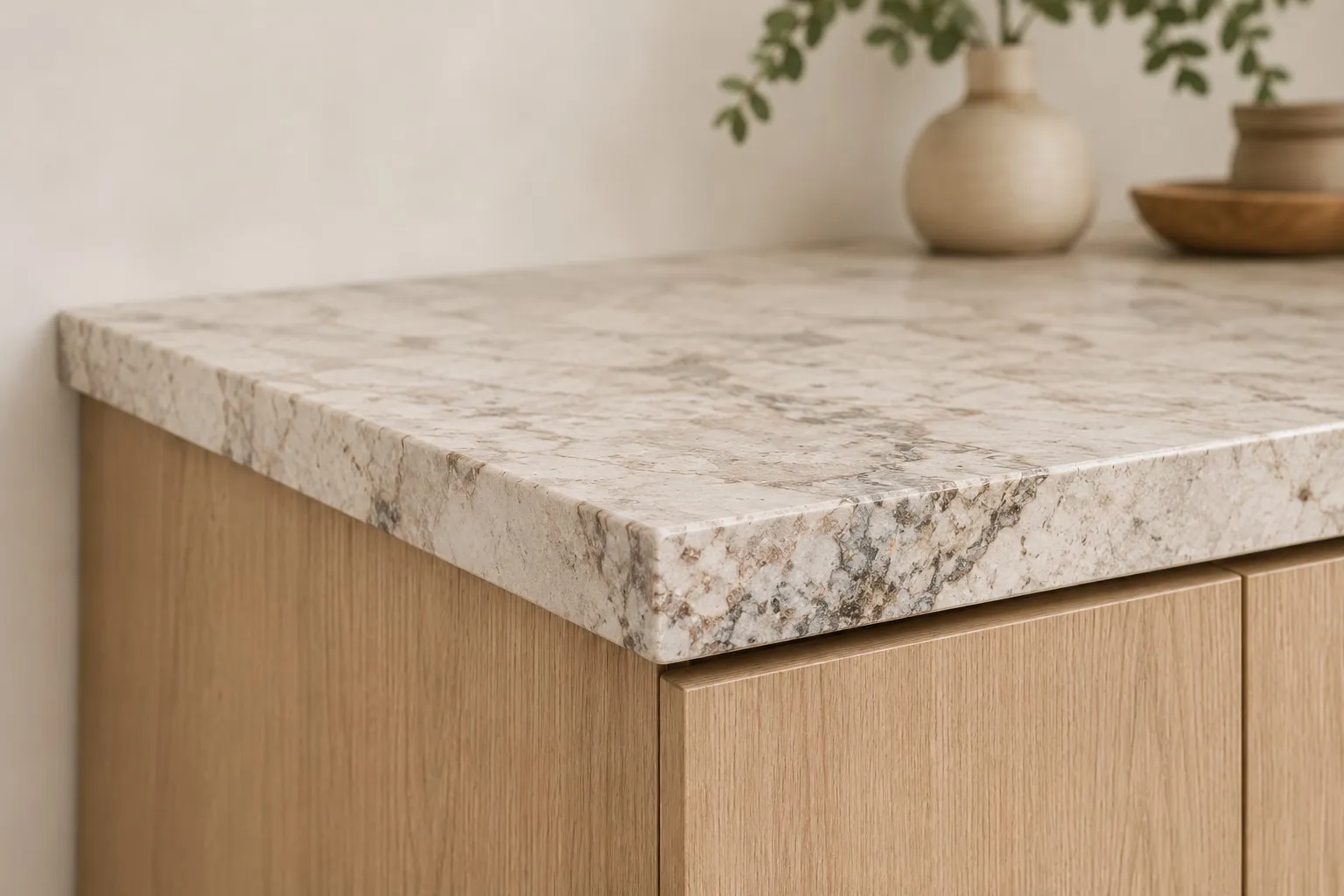
This includes granite, marble and quartzite. Every stone is different, which makes each worktop unique.
Granite is usually the most resistant. Marble is more delicate, but very elegant. Quartzite can offer good resistance and a very special look.
- Pros: natural, exclusive material with plenty of character.
- Cons: some stones can stain, scratch or need sealing.
They are a good option for anyone looking for a natural and distinctive worktop.
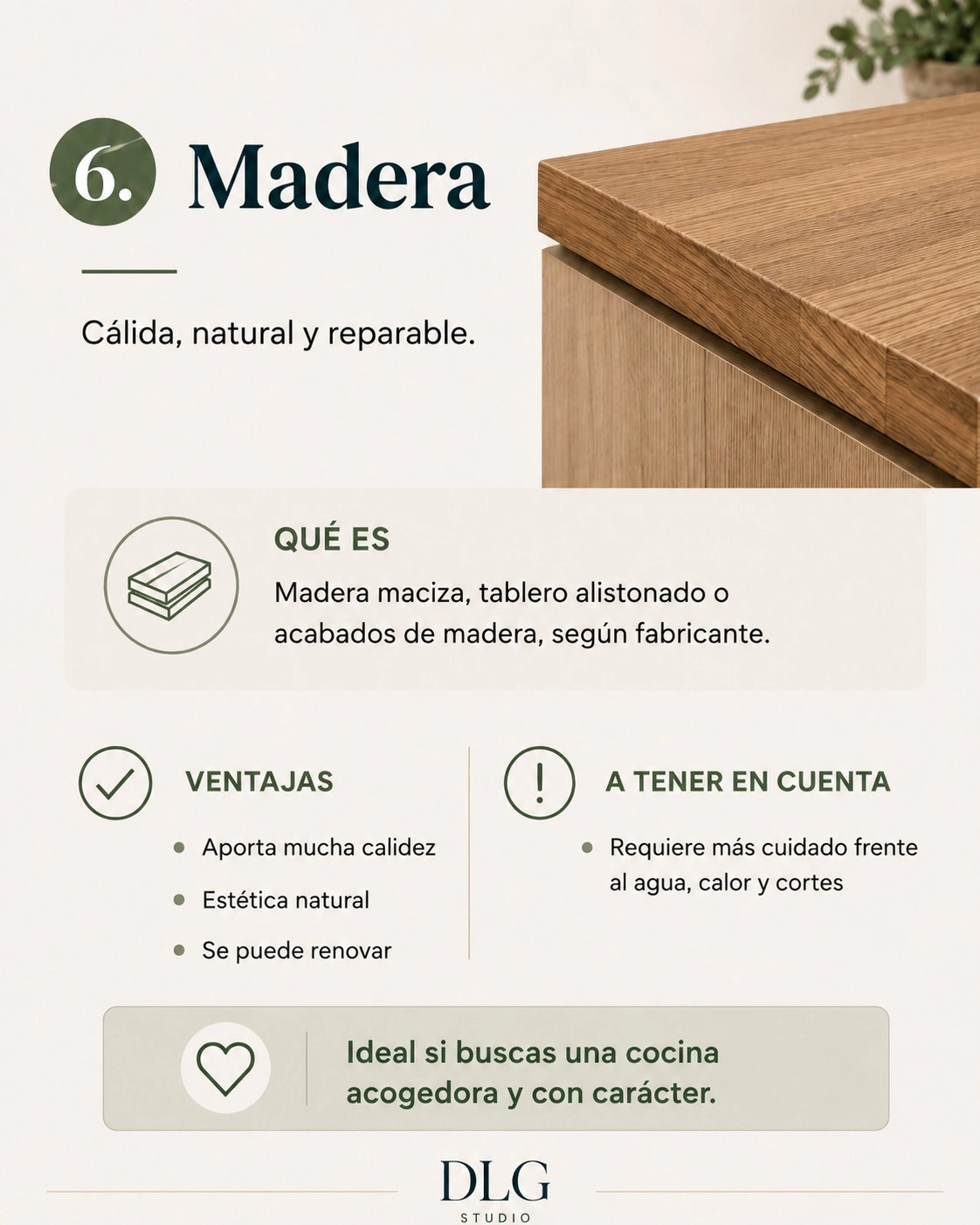
Wooden worktops
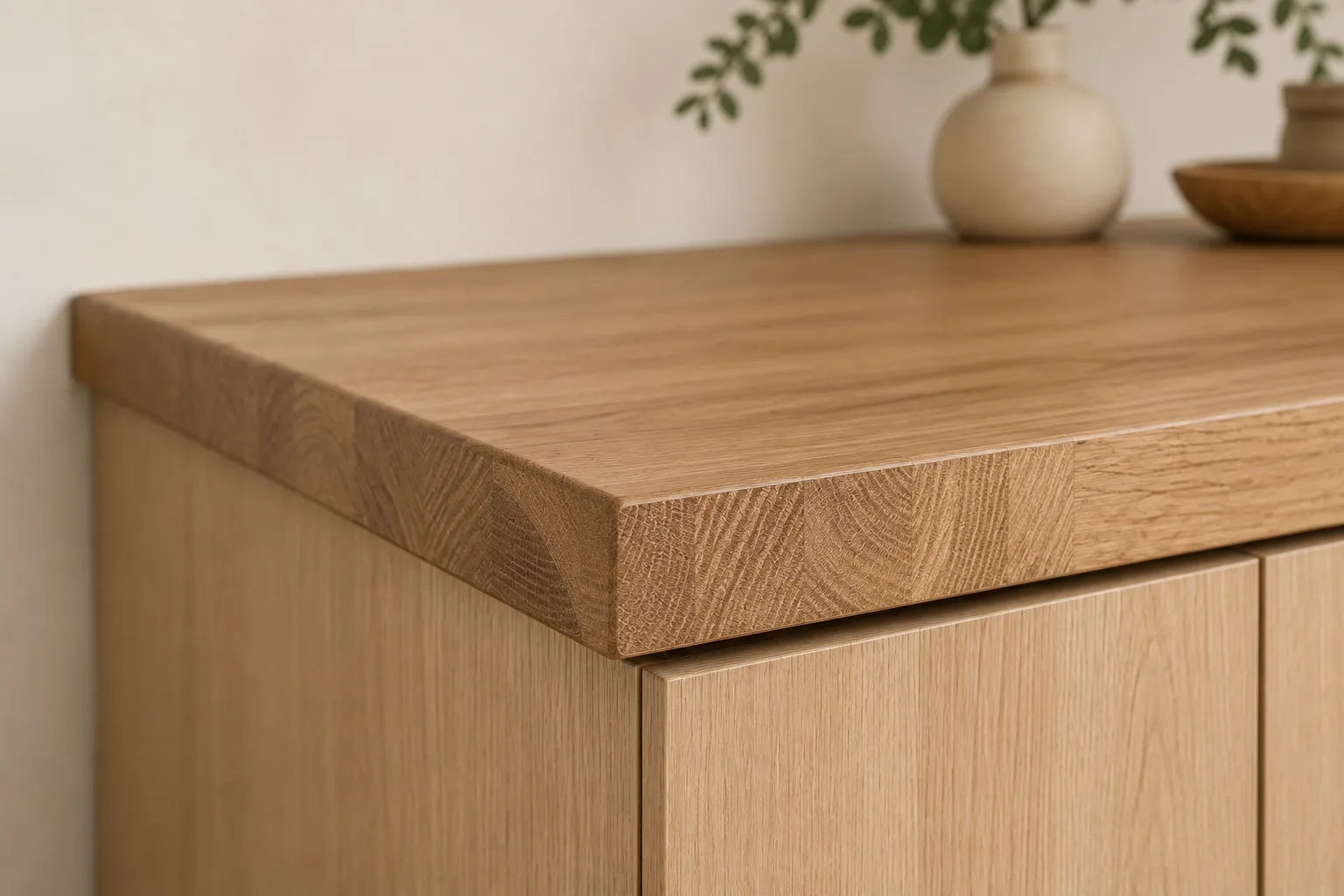
Wood adds warmth and natural texture. It works very well in white, neutral or Mediterranean-style kitchens, so common in homes across Mallorca.
Depending on the manufacturer and budget, it can be solid wood, stave board or wood-effect solutions.
- Pros: warm, natural and repairable appearance.
- Cons: needs more care around water, heat and cuts.
It is ideal for anyone who wants a cosy kitchen and does not mind a little extra maintenance.
Quick material comparison

| Material | Resistance | Maintenance | Price range | Best for |
|---|---|---|---|---|
| Laminate on board | Medium-low | Low | € | Tight budgets, rentals |
| Compact HPL | Medium | Low | €€ | Fine, practical look |
| Compact quartz | High | Very low | €€€ | Everyday family kitchens |
| Porcelain / sintered | Very high | Very low | €€€€ | Heavy use, islands, low maintenance |
| Natural stone | High (depending on stone) | Medium | €€€-€€€€ | Unique pieces, character |
| Wood | Medium | High | €€-€€€ | Warm, cosy kitchens |
This table is a general guide: within each material there are very different ranges and qualities, and the final price depends on measurements, edge and installation.
If your kitchen has difficult corners, columns, very specific gaps or non-standard measurements, the worktop choice is usually tied to the full furniture design. In those cases, it can help to see when a bespoke kitchen makes sense.
Beyond the material itself, measurement, edges, joint placement and installation matter too. A good worktop with poor finishing can still cause problems; that is why at DLG.studio measuring and installation are part of the same project: this is how we work on kitchen renovations in Palma and Mallorca.
Which worktop to choose for a home in Palma or elsewhere in Mallorca
The right material is not the same for every home. Rather than thinking only about location, start with how the kitchen will actually be used:
- Main residence: if you cook every day, prioritise resistance to stains, knocks, occasional heat and quick cleaning.
- Seasonal home: a low-maintenance worktop usually makes sense, easy to clean after weeks without use and forgiving of small oversights.
- Rental or high-turnover home: the balance shifts towards hard-wearing, repairable materials or options with a strong price-to-durability ratio.
When it is worth seeing materials in person
Whenever you can. A photo does not show touch, visual weight or how colour behaves with the real light in your kitchen, and two samples of the same material can feel more different than they appear on screen.
In the private showroom we compare real samples of worktops, fronts and finishes with you, by appointment so we can give you the highest-quality attention and without rushing. It is the fastest way to rule out options and narrow the decision down to two or three realistic candidates for your budget.
So, which worktop should you choose?
There is no perfect worktop for everyone:
- If you want price, laminate on board is a good option.
- If you want something more technical and modern, compact HPL works very well.
- If you want balance, compact quartz is a safe bet.
- If you want maximum resistance, porcelain stands out.
- And if you prefer natural materials, consider stone or wood.
The key is choosing a worktop that fits your budget, your style and the way you really use the kitchen. If you are thinking about yours, tell us about your project and we will help you assess materials, budget and finishes based on your real space.